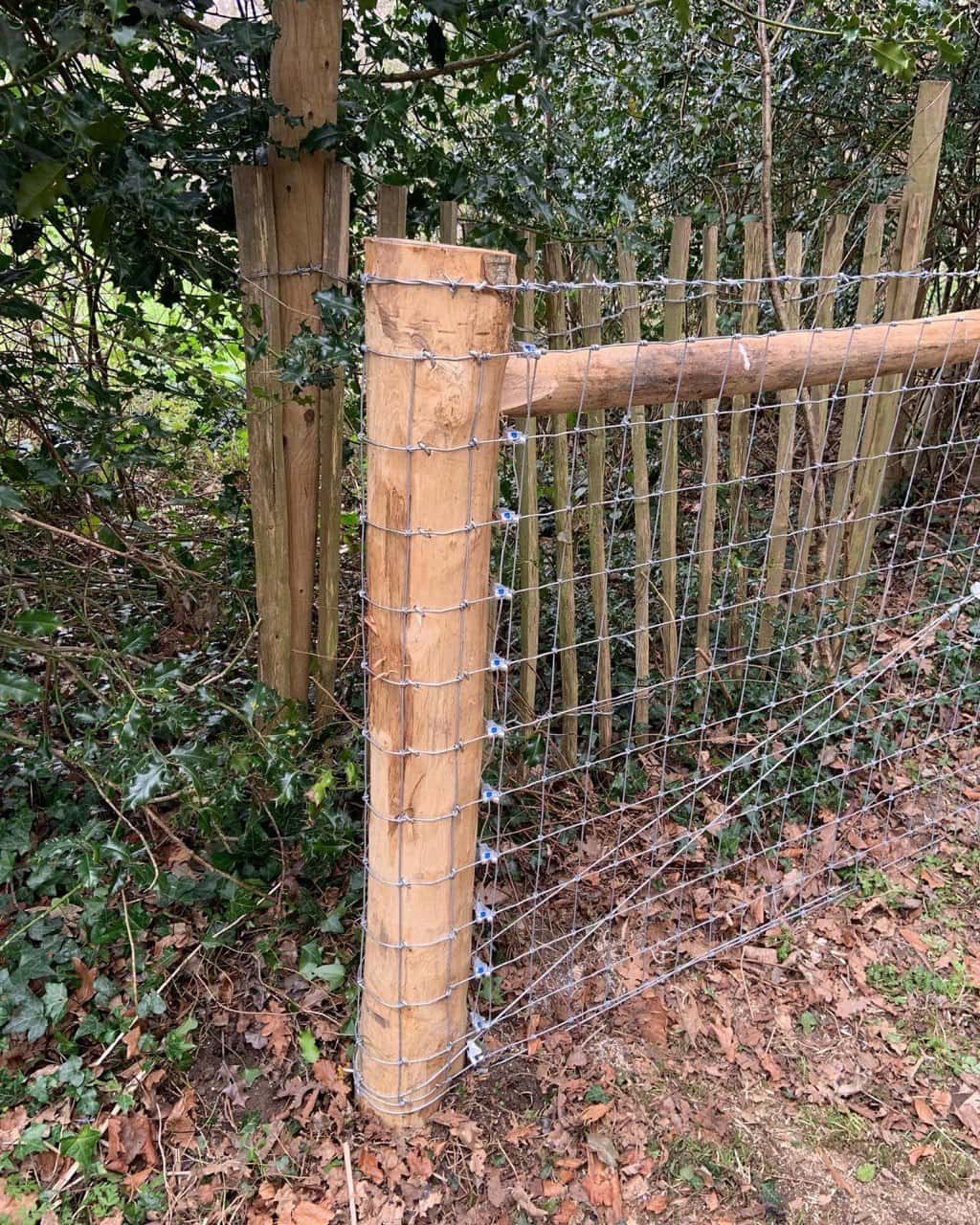
When Should Old Stock Fencing Be Replaced?
Stock fencing is designed to provide a practical, dependable boundary, but like any outdoor installation, it does not remain in the same condition indefinitely. Years of exposure to changing weather, ground movement, vegetation and general use can gradually weaken posts, reduce wire tension and leave sections of fencing less effective than they once were.
The difficulty is knowing when an older stock fence still has useful life remaining and when repeated repairs are simply postponing the need for replacement. For landowners and property owners in Lakenheath, Suffolk, assessing the complete condition of the fence can help determine the most appropriate solution. At Fast Fix Fencing Lakenheath, we provide professional fencing services focused on creating strong, well-installed boundaries suited to their intended purpose.
Stock Fencing Should Be Judged by Performance, Not Age Alone
An old fence does not automatically need replacing.
If the posts remain secure, the wire is appropriately tensioned and there are only isolated areas requiring attention, repairs may still be perfectly reasonable.
Replacement becomes more appropriate when deterioration is widespread and the fence is no longer reliably performing its main function.
Rather than concentrating on one damaged section, consider the entire fence line.
1. Multiple Fence Posts Have Become Weak
Fence posts provide the structural support for the complete installation. If they begin leaning, loosening or deteriorating, the fencing between them can lose stability.
One damaged post may be straightforward to address. Several weakened posts along the same boundary can indicate that the supporting structure is reaching the stage where broader renewal should be considered.
Warning signs include:
- Posts leaning noticeably
- Movement when pressure is applied
- Deterioration around ground level
- Posts no longer holding the fence line correctly
- Several sections losing their original alignment
When the supports are failing throughout the boundary, repeatedly replacing individual posts may become less practical than renewing the affected fencing properly.
2. The Wire Continually Loses Tension
Correct tension is an important part of effective stock fencing.
Wire that has become excessively loose can sag between posts and leave the fence less effective. Older fencing may sometimes be re-tensioned, but this depends on the condition of the wire, posts and fixings.
If the fence repeatedly becomes slack after adjustment, there may be wider deterioration preventing it from maintaining suitable tension.
This is particularly important because the performance of stock fencing depends on the complete system working together.
3. There Are Too Many Damaged Sections
Localised repairs make sense when damage is genuinely isolated.
However, an older fence may gradually accumulate:
- Broken wires
- Distorted mesh
- Loose fixings
- Damaged posts
- Sagging sections
- Previous repairs
- Uneven fence lines
When several of these problems are present throughout the installation, continuing to repair one section at a time can leave the boundary in a constant cycle of maintenance.
Replacement provides an opportunity to restore the complete fence line rather than continually managing individual weak points.
4. The Fence Has Become Uneven or Misaligned
A well-installed stock fence should follow its intended line consistently.
Over time, movement within the ground or deterioration of supporting posts can cause sections to lean or move out of alignment.
Minor variations may not significantly affect performance, but widespread movement can indicate that the fence has lost much of its original stability.
Professional assessment can determine whether the affected sections can be restored or whether the underlying supports have deteriorated sufficiently to justify replacement.
5. The Wire Is Heavily Deteriorated
The condition of the fencing wire itself matters just as much as the posts.
Once wire has become extensively damaged or weakened, maintaining reliable tension becomes increasingly difficult.
A few damaged points may be repairable. Extensive deterioration throughout the mesh is different because repairing individual areas does not restore the condition of the remaining material.
Where the wire is showing widespread deterioration, installing new fencing can provide a more consistent boundary.
6. Vegetation Has Significantly Affected the Fence
Hedges, shrubs and other vegetation can gradually grow through or around stock fencing.
Over time, substantial growth can place pressure on the mesh, affect tension and make the fence more difficult to inspect and maintain.
Once vegetation has been appropriately managed, the condition of the fencing underneath can be assessed.
If the wire has become badly distorted or supporting posts have moved significantly, replacement may provide the opportunity to establish a cleaner and more manageable fence line.
7. Previous Repairs Are Beginning to Fail
The history of the fence can provide useful clues about its remaining condition.
If individual repairs have been carried out successfully over many years, this does not necessarily indicate a problem. However, when previously repaired areas begin failing and new defects continually appear elsewhere, the overall fence may be reaching the point where further patching provides diminishing benefit.
Look at the pattern rather than one repair in isolation.
A boundary containing numerous patched sections may be telling you that the original materials are deteriorating more generally.
8. The Fence No Longer Suits How the Area Is Used
Replacement is not always driven purely by deterioration.
The way land is used can change over time. An older fence may have been perfectly suitable for its original purpose but no longer provide the layout or performance now required.
A replacement installation provides an opportunity to reconsider:
- Fence positioning
- Gate locations
- Access requirements
- Fence height and specification
- Changes in ground levels
- How different areas need separating
This allows the new fencing to be designed around current requirements rather than simply copying an outdated arrangement.
Repair or Replace: How Do You Decide?
There is no single rule that determines when stock fencing must be replaced.
The decision should consider the overall condition of the installation.
Repair may remain suitable where:
- Damage is limited to a small area
- Most posts remain stable
- The wire remains serviceable
- Suitable tension can be restored
- The majority of the fence performs correctly
Replacement becomes more worth considering where:
- Numerous posts are deteriorating
- Wire damage is widespread
- Large sections are sagging
- The fence repeatedly loses tension
- Previous repairs are failing
- The entire boundary has become unstable
A professional inspection can help distinguish between a fence with an isolated problem and one approaching the end of its practical service life.
Why the Posts Matter So Much
Replacing fencing wire while retaining unsuitable posts can compromise the finished result.
Posts must be appropriately positioned and securely installed so that they can support the tension placed on the fence.
Corner, end and strain points deserve particular consideration because these areas play an important role in maintaining the structure of the fence line.
Professional replacement should therefore assess the supporting structure as carefully as the visible mesh.
Correct Tension Is Essential for New Stock Fencing
Stock fencing should not simply be attached loosely between posts.
Appropriate tension helps maintain:
- A consistent fence line
- Effective mesh positioning
- Better overall stability
- A professional finished appearance
The fence must be tensioned in relation to the posts and supporting structure rather than treating the wire as an independent component.
This is one reason quality installation matters from the beginning.
Ground Conditions Need to Be Considered
Fence installation is influenced by the ground through which the boundary passes.
Variations in levels and ground conditions can affect post installation and the way the fence follows the landscape.
Professional installation takes these factors into account rather than assuming every section of fencing can be constructed identically.
Where an old fence has moved significantly, understanding the conditions along the boundary can also help when planning its replacement.
Replacement Can Create a Cleaner Boundary
A heavily repaired fence can eventually begin looking inconsistent even when individual sections remain functional.
Different posts, patches of wire and areas of varying tension can leave the boundary appearing tired.
Replacing extensively deteriorated stock fencing provides an opportunity to create:
- A more consistent fence line
- Secure supporting posts
- Correctly tensioned wire
- Cleaner transitions
- Better planned access points
- A tidier overall appearance
The result is not simply new fencing, but a boundary designed to work effectively as one complete installation.
Why Professional Installation Is Worthwhile
Stock fencing can appear straightforward, but dependable performance depends on more than fixing mesh between posts.
The position and stability of the posts, correct tensioning, changes in direction, corners, ground levels and access points all influence the finished fence.
Poor preparation in one area can affect adjoining sections.
Professional fencing installation considers the complete boundary so that each component supports the next rather than creating isolated weak points.
Professional Stock Fencing in Lakenheath
At Fast Fix Fencing Lakenheath, we provide professional fencing services throughout Lakenheath, Suffolk, including the assessment, repair and replacement of older fencing.
If your existing stock fence has developed loose wire, deteriorating posts, repeated repairs or widespread instability, we can assess the complete boundary and determine the most suitable approach.
Our focus is on addressing the actual condition of the fencing and providing a properly constructed solution that is practical, tidy and suited to the way the area needs to function.
Conclusion
Old stock fencing does not need replacing simply because of its age. A fence with stable posts, serviceable wire and only isolated damage may still be suitable for repair.
Replacement becomes worth considering when deterioration is widespread. Multiple failing posts, repeated loss of tension, damaged mesh, sagging sections and recurring repairs can all indicate that the complete fencing system is no longer performing as intended.
For property and landowners in Lakenheath, Suffolk, Fast Fix Fencing Lakenheath provides professional stock fencing services based on the condition and requirements of each individual boundary. If your existing fence is becoming increasingly difficult to maintain, contact our team to discuss whether professional repair or replacement would provide the most appropriate solution.
Call us on: 01842 771 088
Click here to find out more about Fast Fix Fencing Lakenheath
Click here to complete our contact form and see how we can help with your fencing needs.